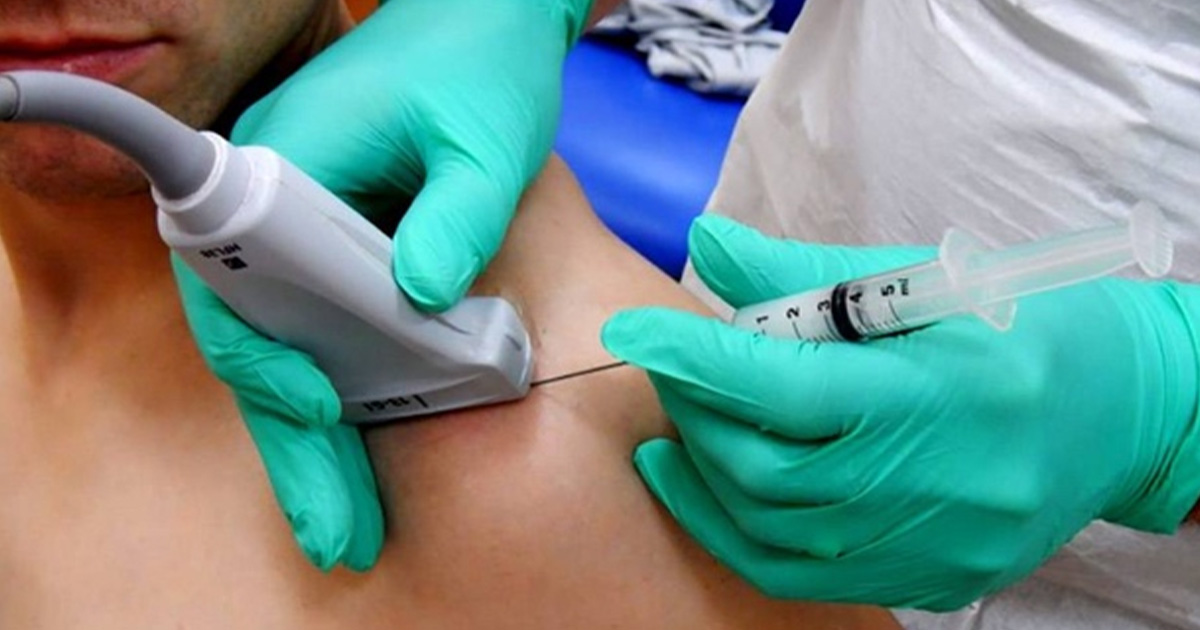
This procedure has revolutionized the field of orthopedics by allowing for more precise and accurate delivery of medications directly to the source of pain or inflammation.
1. How it works:
- Real-time imaging:
- Ultrasound technology uses high-frequency sound waves to create real-time images of the internal structures of the body.
- Needle guidance:
- During the procedure, the doctor uses the ultrasound images to guide the needle precisely to the target area, such as a specific joint, tendon, or ligament.
- Minimized risk:
- This real-time visualization helps to minimize the risk of injecting medication into surrounding tissues or structures, which can cause side effects or complications.
2. Benefits of Ultrasound-Guided Injections:
- Increased accuracy:
- Ultrasound guidance significantly improves the accuracy of injections, ensuring that the medication reaches the intended target.
- Reduced risk of complications:
- By minimizing the risk of injecting medication into surrounding tissues, ultrasound guidance helps to reduce the risk of complications such as nerve damage, infection, and bleeding.
- Improved patient comfort:
- The procedure is generally less painful and more comfortable for patients as the doctor can precisely target the injection site.
- Reduced need for repeated injections:
- By accurately delivering medication to the source of pain, ultrasound-guided injections may reduce the need for multiple injections.
- Versatility:
- Ultrasound guidance can be used for a wide range of orthopedic injections, including:
- Corticosteroid injections
- Hyaluronic acid injections
- Platelet-rich plasma (PRP) injections
- Nerve blocks
- Ultrasound guidance can be used for a wide range of orthopedic injections, including:
3. Conditions treated with Ultrasound-Guided Injections:
- Arthritis such as osteoarthritis, rheumatoid arthritis.
- Tendinitis such as Inflammation of tendons.
- Bursitis such as Inflammation of bursae (fluid-filled sacs that cushion joints).
- Muscle pain.
- Joint pain.
4. Possible complications:
Although generally safe, there’s always a slight risk of complications with any medical procedure, including ultrasound-guided injections. These can include:
- Infection:
- Although rare, there’s a small risk of infection at the injection site.
- Bleeding:
- Minor bleeding at the injection site is possible.
- Nerve damage:
- In rare cases, nerve damage can occur, but this is usually temporary.
- Allergic reactions:
- Allergic reactions to the injected medication are possible, although uncommon.
5. Combined with other treatments:
Ultrasound-guided injections are often used in conjunction with other treatments, such as physical therapy, to maximize pain relief and improve function.
6. Patient guide for pre-paration:
Before the procedure, your doctor may ask you to stop taking certain medications, such as blood thinners, for a short time. You may also need to avoid eating or drinking for a certain period before the injection.
7. Recovery:
Most patients can return home shortly after the procedure. You may experience some discomfort or soreness at the injection site, but this usually subsides within a few days. Your doctor will provide you with specific instructions on how to care for the injection site and any activity restrictions.
Important Notes:
- You need to consult your doctor before stop taking medication. Do not stop taking medications on your own, as certain conditions may carry risks when medications are discontinued
- While ultrasound guidance offers significant advantages, it may not always be necessary for every injection. Your doctor will determine if ultrasound guidance is the most appropriate approach based on your specific condition and individual needs.
Disclaimer: This information is for general knowledge and informational purposes only and does not constitute medical advice. Consult a qualified healthcare professional for diagnosis and treatment of any medical conditions.