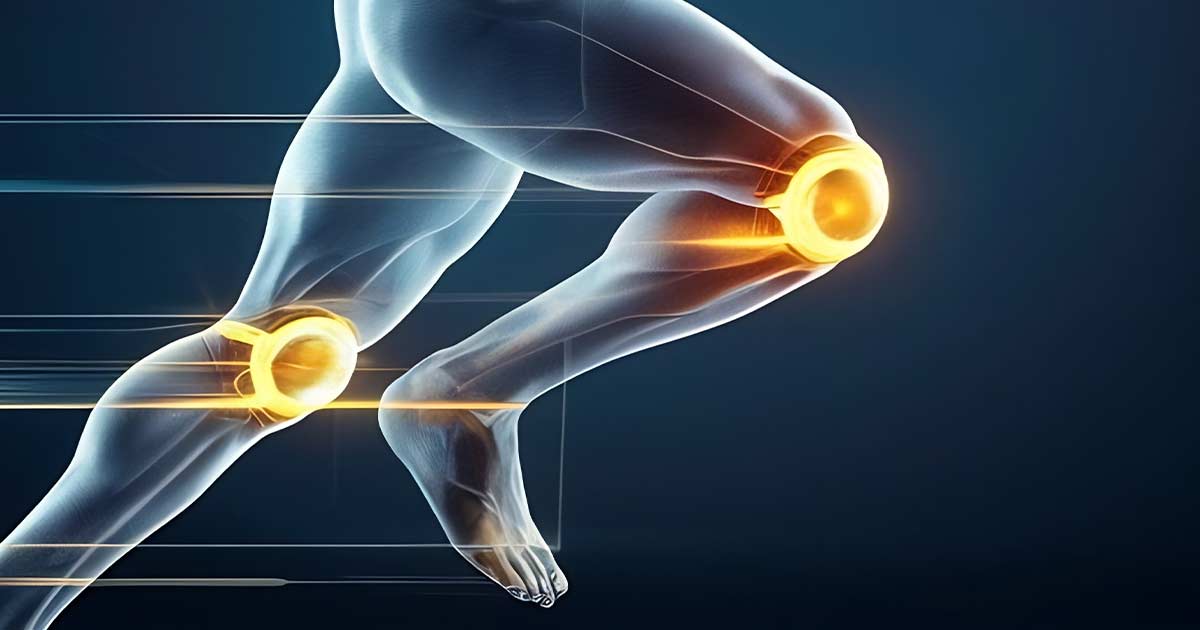
The knee is a critical joint that supports your every move, from standing to running. As an Orthopedist and Sport Medicine, I provide expert insights into the complex structure of the knee including its bones, ligaments, tendons, and cartilage. Whether you’re recovering from knee surgery or seeking preventative care, I am dedicated to helping you maintain optimal knee health for an active and pain-free lifestyle.
Knee Anatomy and Function
The knee is a complex joint that connects the thighbone (femur) to the shinbone (tibia) and kneecap (patella). It is a hinge joint, allowing for flexion (bending) and extension (straightening) of the leg.
Key Components of the Knee Joint
- Bones:
- Femur: The thighbone, the longest and strongest bone in the human body.
- Tibia: The shinbone, the larger of the two bones in the lower leg.
- Patella: The kneecap, a small, triangular bone that protects the front of the knee joint.
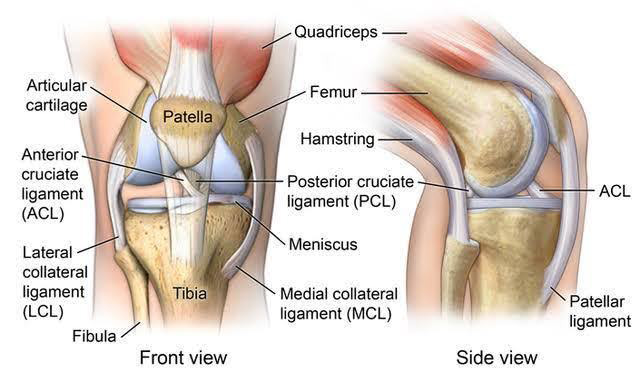
- Articular cartilage: A smooth, slippery tissue that covers the ends of the bones, reducing friction and cushioning the joint. Covers the surfaces of the femur, tibia, and patella.
- Ligaments: Strong, fibrous tissues that connect bones to bones, providing stability to the joint.
- Cruciate ligaments: Two ligaments (anterior cruciate ligament – ACL and posterior cruciate ligament – PCL) that cross each other within the knee joint, preventing excessive forward and backward movement.
- Collateral ligaments: Two ligaments (medial collateral ligament – MCL and lateral collateral ligament – LCL) that run along the sides of the knee, preventing excessive side-to-side movement.
- Tendons: Tough, fibrous tissues that connect muscles to bones, allowing for movement.
- Quadriceps tendon: Connects the quadriceps muscles to the patella.
- Patellar tendon: Connects the patella to the tibia.
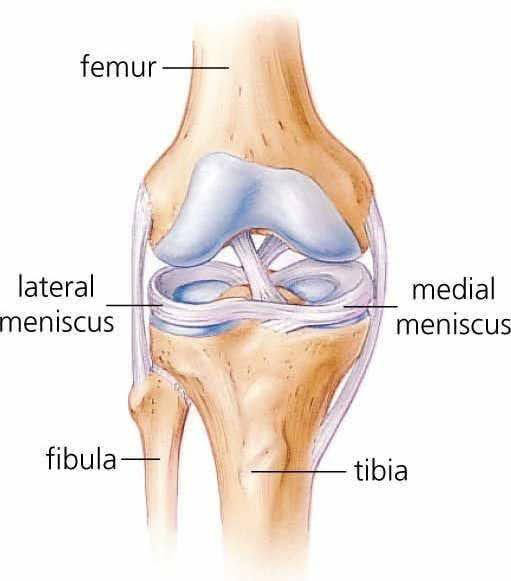
- Meniscus: Two C-shaped pieces of cartilage that act as shock absorbers between the femur and tibia.
Functions of the Knee Joint
- Weight-bearing: The knee joint supports the weight of the body during standing, walking, and other activities.
- Movement: The knee joint allows for flexion and extension of the leg, as well as some rotational movement.
- Stability: The ligaments and muscles surrounding the knee joint provide stability and prevent excessive movement.